Warehouse Floor Coating Cost in Phoenix: Epoxy vs Polished vs Sealed Concrete
Compare epoxy warehouse flooring, polished concrete, and sealed concrete for Phoenix facilities. Learn what drives cost, downtime, durability, and long-term maintenance.
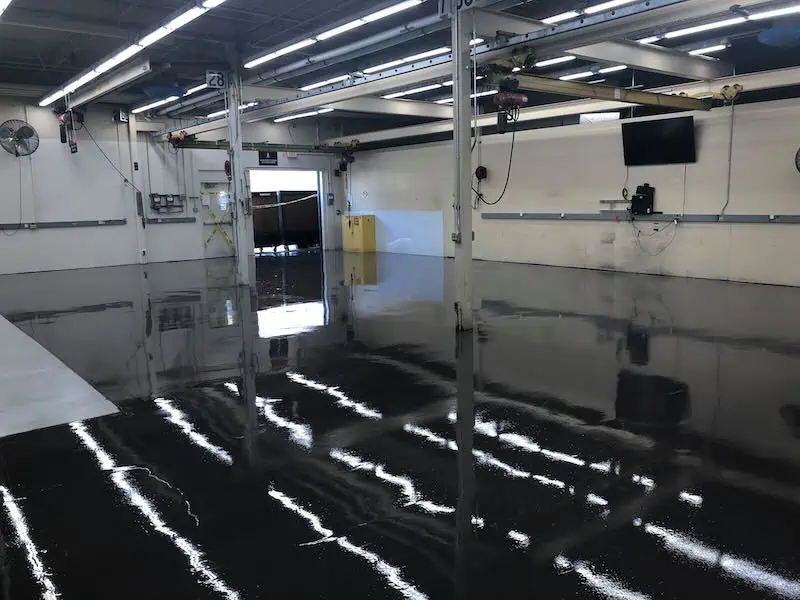
Why Warehouse Floor Cost Depends on the System, Not Just Square Footage
A Phoenix warehouse floor has to survive more than ordinary foot traffic. Forklifts, pallet jacks, delivery vehicles, abrasive dust, battery fluids, tire marks, safety striping, and tight shutdown windows all change the right flooring specification.
That is why warehouse floor coating cost should be evaluated by total facility need, not just a square-foot number. A lightly used storage area may only need a hardened polish or protective sealer, while a logistics bay, production area, or chemical storage zone may need a high-build epoxy or urethane system with joint repair, vapor control, and slip-resistant texture.
Looking for Commercial Resinous Flooring in Phoenix?
Engineered high-solids polymer finishes, decorative metallic systems, and quartz mortars optimized for commercial traffic. Don't deal with chipping retail materials—get commercial reliability backed by our written warranty.
Epoxy Warehouse Flooring
Commercial epoxy is usually the best fit when the slab needs real protection from forklift traffic, oils, chemicals, staining, or abrasion. In a warehouse, epoxy can create a thicker protective film over the concrete, making the floor easier to clean and less likely to dust, pit, or absorb spills.
The biggest cost drivers are concrete preparation, crack and joint repair, coating thickness, chemical exposure, topcoat selection, and whether safety lines or walkways are built into the system. For active facilities, scheduling also matters because night, weekend, or phased installation may be needed to keep operations moving.
Epoxy is usually the strongest choice when the facility needs:
- Forklift and pallet-jack wear resistance
- Chemical, oil, battery-fluid, or tire-mark protection
- Safety striping, pedestrian lanes, or demarcation zones
- A cleanable surface for production, storage, or service operations
- A higher-build system over repaired or aging concrete
Polished Concrete
Polished concrete can be a smart choice for warehouses, showrooms, offices, and storage areas where the existing slab is sound and the goal is low maintenance rather than heavy chemical protection. The process mechanically grinds, densifies, and polishes the concrete itself, so there is no film coating to peel.
The tradeoff is that polished concrete does not perform like a high-build resin floor in every environment. It can still stain from certain chemicals, and it will not bridge cracks, rebuild damaged joints, or create the same protective layer that epoxy provides. Cost depends on slab condition, aggregate exposure, desired gloss, edge detailing, and how much patching is needed before the polishing sequence begins.
Polished concrete often fits best for:
- Retail-adjacent warehouse showrooms
- Light industrial spaces with clean slab conditions
- Facilities prioritizing reflectivity and easy dust control
- Areas where peel risk should be avoided because no film coating is desired
Sealed Concrete
Sealed concrete is usually the lowest-build option. It can reduce dusting and make cleaning easier, but it is not the same as an industrial epoxy coating or a mechanically polished floor. Sealers are often useful for low-traffic storage, back-of-house areas, or temporary budget-sensitive improvements.
The limitation is durability. A basic sealer can wear faster under turning forklifts, hot tires, aggressive cleaning, or chemical spills. For a Phoenix warehouse where uptime and slab protection matter, sealed concrete should be chosen only after confirming that the area does not need heavy-duty impact, chemical, or abrasion resistance.
Preparation Is the Cost Line Item That Protects the Whole Project
The most important part of any warehouse floor budget is substrate preparation. Coatings fail when they are installed over concrete dust, old sealers, curing compounds, oil contamination, weak surface paste, or unresolved moisture pressure.
Carefree Stone uses mechanical preparation methods such as diamond grinding to open the concrete profile before applying commercial systems. For warehouse work, the scope may also include joint filling, crack routing, patching, moisture mitigation, and staged installation planning so the floor system matches the slab and the business schedule.
How to Choose the Right Warehouse Floor System
If the warehouse has forklifts, frequent vehicle traffic, chemical exposure, safety striping needs, or damaged concrete, start with a commercial epoxy assessment. If the slab is clean, consistent, and the goal is an architectural low-maintenance finish, polished concrete may be a better fit. If the area is light-use storage and budget is the main constraint, sealed concrete may be enough.
The best next step is a facility assessment that reviews square footage, slab condition, traffic patterns, shutdown timing, and performance requirements. That gives the project a practical coating schedule instead of a generic estimate.
More Commercial Flooring Articles
Commercial Kitchen Epoxy Flooring in Arizona: Shutdowns, Slip Resistance, and Health Department Requirements
Commercial FlooringHealthcare and Lab Epoxy Flooring in Arizona: Infection Control, Cove Base, and ESD Options
Commercial FlooringEpoxy vs. Urethane Floor Sealing | Why the Best Commercial Floors Use Both

Jeff Newcombe
Owner & Lead Coatings Specialist
Jeff Newcombe is the owner of Carefree Stone. For over 40 years, he has helped Arizona homeowners and business owners transform their concrete surfaces with high-performance epoxy garage flooring, Kool Deck pool deck restoration, and custom resinous overlays tailored for the desert climate.
Learn more about Jeff →Request A Commercial Project Review
Send facility type, square footage, schedule, substrate photos, and scope notes so our team can review the right commercial system.